Central Bank of The Gambia and AFRACA discuss the Strategic Plan 2026 to 2030 and training for financial institutions
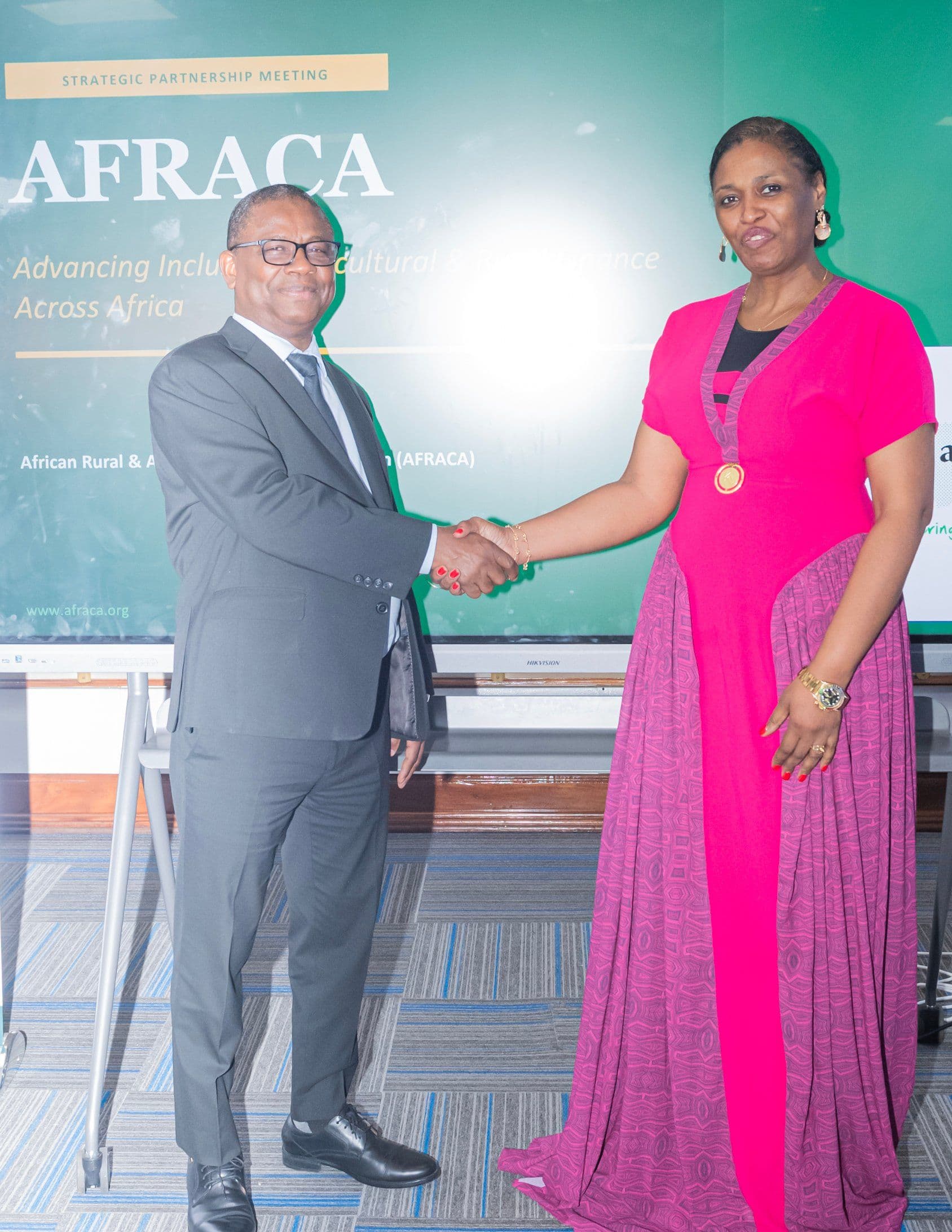
The Central Bank of The Gambia met the AFRACA Secretariat in Nairobi on 18 September 2026, the closing day of the 2026 Annual Meetings of the Association of African Central Banks, hosted by the Central Bank of Kenya during its sixtieth anniversary week. Ms. Ngo B. Anny Caroll, Secretary General of the African Rural and Agricultural Credit Association, received the First Deputy Governor and delegation at the Secretariat's offices at the CBK Institute of Monetary Studies.
The two sides exchanged views on financial inclusion, institutional cooperation, training and knowledge sharing, and the delegation was receptive to the presentation as a whole.
The Strategic Plan 2026 to 2030
The Secretary General presented AFRACA's Strategic Plan 2026 to 2030, which moves the association from convening to implementation through two lines of work:
- Technical assistance and advisory services: institutions, products, risk management, climate readiness and investment and project preparation.
- Capital mobilisation, financing and fund creation: credit lines, financing partnerships, guarantees and investment opportunities for AFRACA members.
AFRACA can help translate policy priorities into practical programmes delivered with financial institutions and development partners. Interventions are tailored to each country's needs and benefit from regional peer learning.
Training
AFRACA's demand-driven training programmes cover agricultural loan analysis, value chain finance, digital finance and enterprise risk management.
Follow-up
The meeting closed on the four steps proposed to each central bank: a focal point at the bank; one priority where collaboration can begin; the national institutions to connect with AFRACA; and a practical next step.
AFRACA thanks the First Deputy Governor and the Central Bank of The Gambia delegation for meeting the Secretariat during a full AACB week.
AFRACA was established in 1977 under the auspices of the Food and Agriculture Organization and connects more than 85 member institutions in 30 African countries.