Central Bank of Lesotho and AFRACA discuss collateral registries, policy advocacy and the exchange programme
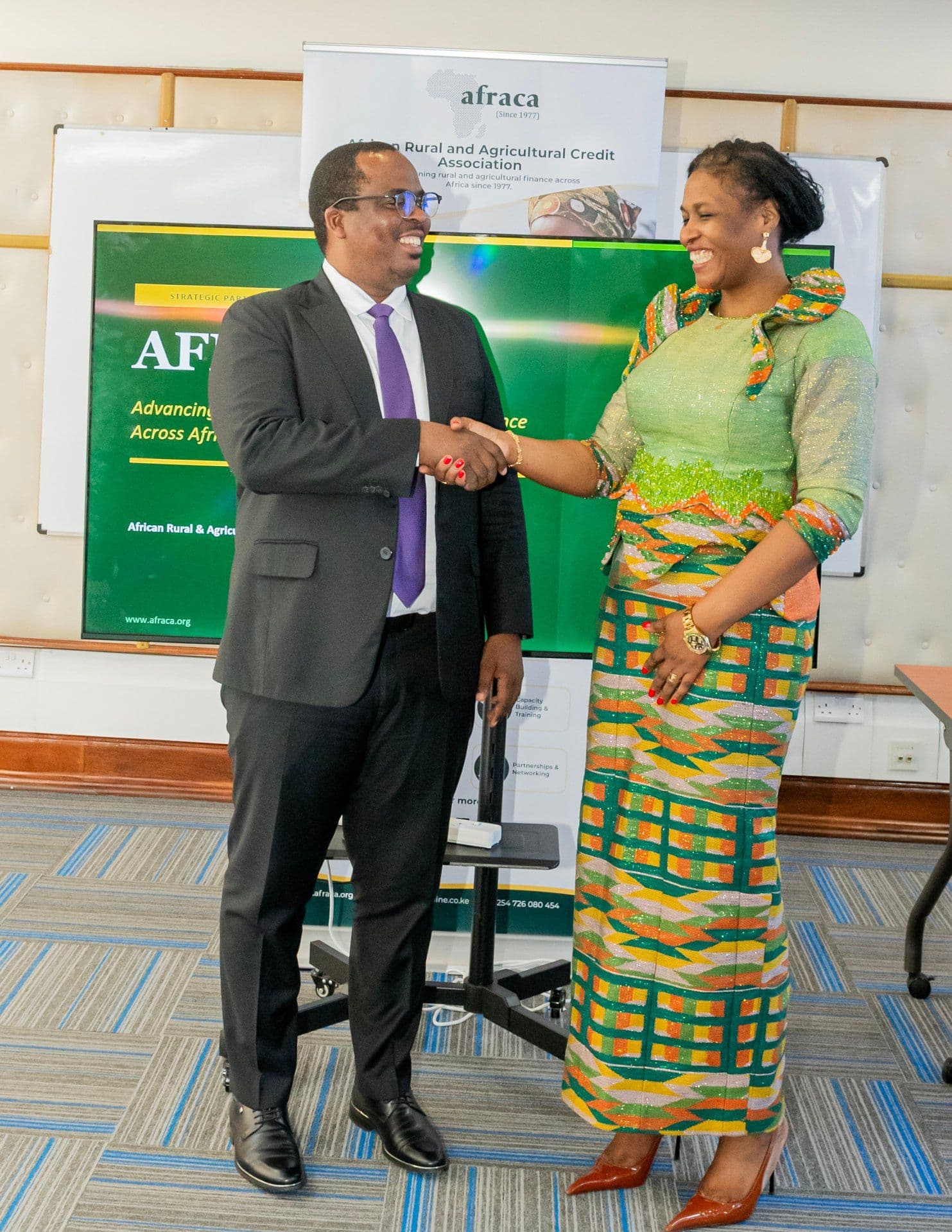
The Central Bank of Lesotho met the AFRACA Secretariat in Nairobi on 17 September 2026, on the margins of the 2026 Annual Meetings of the Association of African Central Banks, hosted by the Central Bank of Kenya during its sixtieth anniversary week. Ms. Ngo B. Anny Caroll, Secretary General of the African Rural and Agricultural Credit Association, received the Governor and delegation at the Secretariat's offices at the CBK Institute of Monetary Studies.
The discussion covered institutional cooperation, financial inclusion, knowledge sharing, and new approaches to improving access to finance. The Governor's interest centred on the research on collateral registries, the Multi-Country Exchange Programme, policy advocacy and access to credit.
Collateral registry research
The Secretary General presented AFRACA's planned research on movable collateral registries. Collateral constraints remain a major barrier for farmers, SMEs and rural enterprises that lack land or other conventional security. The research will compare the status, use and effectiveness of registries across African markets, covering:
- Legal frameworks and enforcement
- Registration costs and eligible asset types
- Lender awareness
- Actual impact on lending
The findings are intended to support policy recommendations, peer learning and practical improvements in agricultural and SME finance.
The Multi-Country Exchange Programme
AFRACA's Multi-Country Exchange Programme runs from 2 to 6 November 2026 across Kenya, Tanzania, Ghana, Uganda, Zimbabwe, Cameroon, Senegal, Burkina Faso and Nigeria, taking practitioners from member institutions into each other's markets for a working week. The Bank's interest was in taking part in future rounds of the programme.
Policy development and advocacy
Policy development and advocacy is one of AFRACA's six strategic pillars: influencing regulatory frameworks for rural and agricultural finance across African governments and central banks. For a central bank, AFRACA offers a regional platform to compare approaches with peers.
Credit lines and capital mobilisation
Under the Strategic Plan 2026 to 2030, capital mobilisation, financing and fund creation is one of AFRACA's two lines of work: credit lines, financing partnerships, guarantees and investment opportunities for members. AFRACA mobilises and channels wholesale credit lines from development partners, among them BOAD, EBID, AFD and AfDB, to member financial institutions, and the proposed AFRACA Rural and Agricultural Fund would add a pan-African mechanism for the same purpose.
Follow-up
The meeting closed on the four steps proposed to each central bank: a focal point at the bank; one priority where collaboration can begin; the national institutions to connect with AFRACA; and a practical next step.
AFRACA thanks the Governor and the Central Bank of Lesotho delegation for making this meeting a priority during the AACB Annual Meetings.
AFRACA has held diplomatic status in Kenya since 2003 and brings together more than 85 member institutions in 30 African countries.